Audrey Hepburn: Fashion Icon, Yes — But First, An Actress
When people hear the name Audrey Hepburn, the first images that come to mind are usually fashion-related: the black Givenchy dress, pearls, oversized sunglasses, cigarette holder — the Breakfast at Tiffany’s aesthetic. She’s plastered on Pinterest boards, dorm posters, and TikTok moodboards under “old money inspo.” And yes — her fashion legacy is untouchable. But too often, that style-icon status overshadows something arguably more important: Audrey Hepburn could really act. It’s easy to reduce her to a visual archetype, but Audrey’s career is full of emotionally layered performances, comedic timing, and quiet resilience. She wasn’t just a mannequin for haute couture — she brought intelligence, depth, and vulnerability to her roles in a way that’s still remarkably resonant.
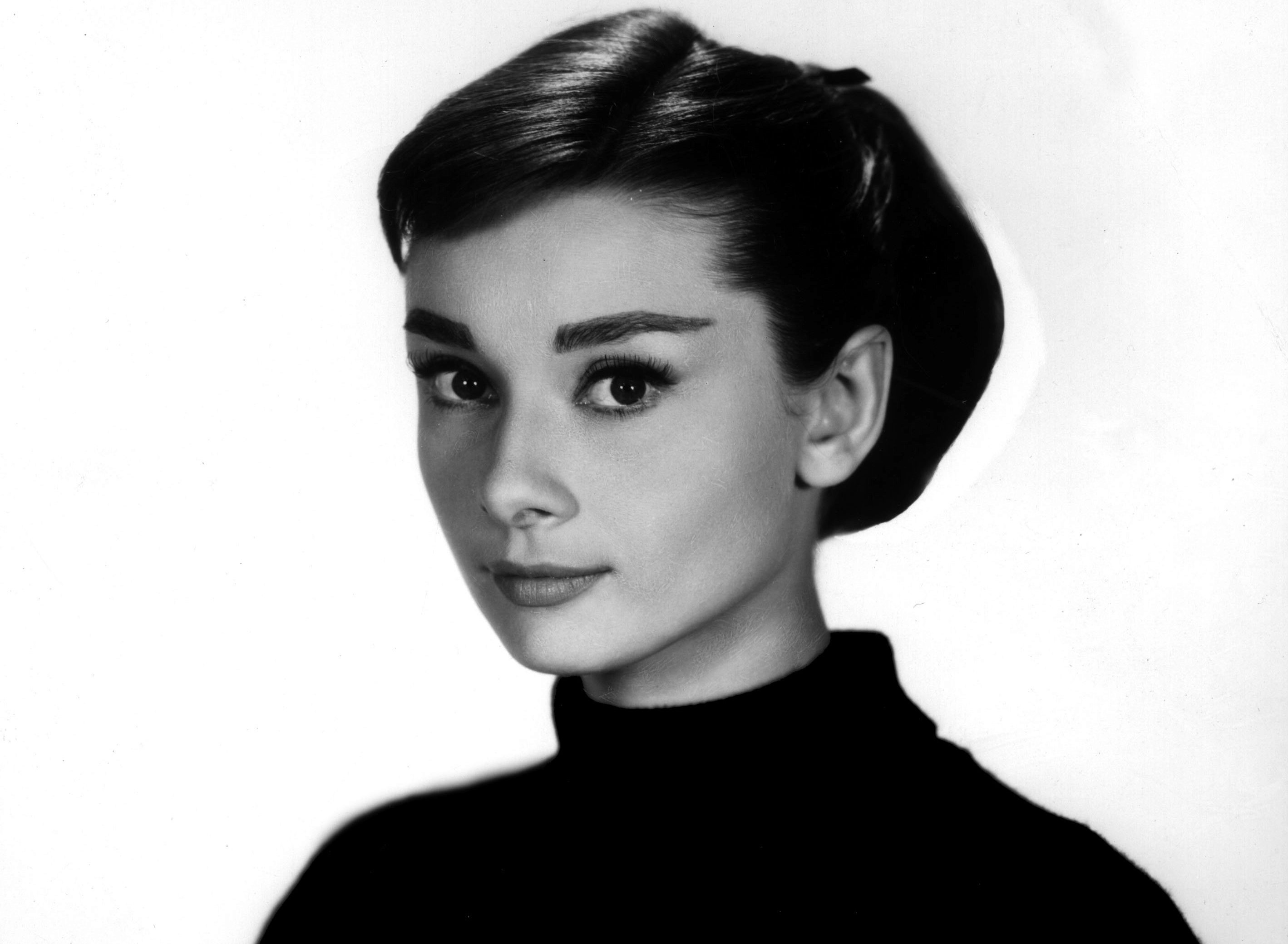
Audrey Hepburn
Escaping Royalty: Audrey Hepburn’s Dazzling Debut
When you think about iconic Hollywood debuts, it’s impossible not to mention Audrey Hepburn in Roman Holiday (1953). It wasn’t just her first starring role — it was a performance that won her an Academy Award, launched her into international stardom, and reshaped what audiences expected from a female lead. But beyond the glamour and acclaim, what makes Hepburn’s turn as Princess Ann in Roman Holiday so unforgettable is its emotional intelligence, subtlety, and naturalism. It’s not just a “star is born” moment — it’s an acting masterclass.
Directed by William Wyler, Roman Holiday tells the story of Princess Ann, a young European royal who’s grown weary of the rigid protocol and public appearances that come with her status. During a diplomatic tour of Rome, she rebels against her tightly controlled life and sneaks away from the palace one night — only to find herself roaming the city alone, unrecognized.
Enter Joe Bradley (played by Gregory Peck), a charming but jaded American journalist who stumbles across the seemingly dazed Ann sleeping on a park bench. Realizing who she really is, he sees a golden opportunity for an exclusive story. He pretends not to recognize her and offers to show her around Rome, secretly planning to write a piece that will make his career.
As the two spend a whirlwind day together exploring the city — from gelato on the Spanish Steps to joyrides on a Vespa — the romantic tension grows. But so does Ann’s inner conflict. She knows she can’t run away forever. Eventually, she must return to her royal duties — and Joe must decide whether to publish the story or protect her secret. The ending is famously bittersweet: they part ways, with nothing more than a shared memory and a silent understanding.
What makes Hepburn’s performance so astonishing is how much dimension she gives to what could have been a paper-thin character. In lesser hands, Princess Ann might have just been a wide-eyed ingénue or a damsel in distress. But Hepburn plays her as someone both innocent and intelligent, naïve yet perceptive, restrained yet emotionally alive.
In early scenes, she effortlessly communicates Ann’s quiet frustration with palace life — through posture, tone, and facial expressions more than dialogue. There’s a visible tension in her body during diplomatic appearances, and when she breaks down behind the scenes, it doesn’t feel melodramatic. It feels real. When she finally escapes the palace and wanders Rome incognito, you can see that childlike curiosity reawaken. But Hepburn never plays her as simple-minded; she’s observing, learning, adapting — and slowly rediscovering herself.
Audrey’s ability to convey emotional shifts through small, precise gestures is one of the key reasons this performance still resonates. A particularly good example is the iconic barber shop scene, where Ann impulsively cuts her hair short to begin her transformation. Her delight at this tiny rebellion is so earnest that you can’t help but root for her. But even within the fun, there’s an undercurrent of uncertainty — a reminder that this freedom is temporary.
And of course, the final scene. Instead of ending with a sweeping romantic gesture, Roman Holiday closes with Princess Ann returning to her official role, delivering a press conference while Joe watches from the crowd. It’s one of the most emotionally devastating scenes in classic cinema — not because of what’s said, but because of what’s held back. Hepburn’s eyes do everything: recognition, longing, resolve. She lets the silence breathe. It’s a performance grounded in emotional truth, and it lingers long after the credits roll.
Audrey Hepburn’s performance represents a turning point in Hollywood’s idea of what a leading lady could be. She wasn’t brash or seductive in the traditional 1950s sense. She didn’t lean into overt sensuality or dramatic outbursts. Her power came from nuance — the kind of acting that invites you in rather than demanding attention.
Moreover, her chemistry with Gregory Peck works not just because they’re opposites (gritty American journalist vs. elegant princess), but because she meets him as an equal. The emotional intelligence and quiet strength she brings to Princess Ann ensures she’s never just a romantic interest — she’s a fully realized character with agency, dignity, and growth.
Audrey Hepburn in Roman Holiday is more than a charming first role — it’s a performance that carries the entire film with grace, depth, and maturity. In an era that often asked women to be either bombshells or damsels, she charted a new path: a heroine who was graceful but grounded, fashionable but emotionally real.
Whether you’re a film student, a casual moviegoer, or someone just now discovering old Hollywood, Roman Holiday remains a perfect entry point into Audrey’s career — and proof that style and substance aren’t mutually exclusive. In fact, she made them inseparable.
A Fashion Icon is Born
One of the most striking elements of Roman Holiday — and a major reason the film remains visually iconic — is Audrey Hepburn’s wardrobe. Designed by Edith Head, with influence from Hepburn herself and her future collaborator Hubert de Givenchy, the costumes in the film are deceptively simple but profoundly influential. In contrast to the opulent gowns of her royal life, Princess Ann’s disguise as a “commoner” consists of a crisp white blouse, a neck scarf, and a belted A-line midi skirt. This look was a departure from the highly structured, glamorized silhouettes of the early ’50s, and signaled a move toward more relaxed, modern femininity.
What made Hepburn’s fashion in Roman Holiday so influential wasn’t just the clothes themselves — it was how she wore them. She carried herself with a natural poise and quiet confidence, without ever appearing self-conscious or overly styled. The wardrobe worked in perfect harmony with her character’s arc: as Ann sheds the constraints of royalty, her clothing reflects both vulnerability and newfound agency. The costume choices feel intentional without being flashy, allowing her character’s transformation to resonate more deeply. Fashion here becomes a narrative device — her haircut, for instance, marks a literal and symbolic shedding of her identity. Even her most casual looks are imbued with intention and narrative weight.
In retrospect, Roman Holiday established the foundation for Hepburn’s reputation as a fashion icon. It introduced audiences to a new kind of elegance — one based not on excess or embellishment, but on clarity, tailoring, and personality. The styles she wore in the film were quickly emulated by women around the world and remain staples of classic fashion even today. More than just costumes, they were a visual expression of a cultural shift: toward freedom, minimalism, and authenticity. Audrey didn’t just wear the clothes — she defined them. And in doing so, she helped bridge the worlds of cinema and fashion in a way that few actresses before or since have achieved.
Audrey Hepburn’s Revolutionary Performance
When people think of Audrey Hepburn, the first image that often comes to mind is Holly Golightly standing in front of Tiffany’s — oversized sunglasses on, black Givenchy gown perfectly draped, pastry in hand. It’s a moment that has been endlessly reproduced, reinterpreted, and referenced, becoming one of the most iconic visuals in Hollywood history. But what many don’t realize is that Hepburn wasn’t the obvious choice for Breakfast at Tiffany’s. In fact, Truman Capote, who wrote the original novella, famously envisioned Marilyn Monroe in the role. He saw Holly as sultry, chaotic, and overtly sexual — qualities Monroe naturally embodied in the public eye. But when Monroe’s acting coach warned her that the role might damage her image, the studio turned to Hepburn — a move that surprised even Audrey herself.
At first glance, Hepburn might seem miscast. Her public persona was built on poise, grace, and innate sophistication — a far cry from Capote’s impulsive, self-destructive party girl. But that exact contrast is what makes her performance in Breakfast at Tiffany’s so remarkable. Hepburn doesn’t try to channel Monroe or play Holly as overtly sexy. Instead, she offers something more emotionally nuanced. Her Holly is not simply a charming New York socialite; she’s a woman teetering on the edge of self-delusion. Beneath the glamour and surface confidence lies a character who is terrified of commitment, deeply uncertain of her place in the world, and desperately trying to construct an identity that will protect her from heartbreak. It’s in the quiet moments — like her wistful rendition of “Moon River” on the fire escape — that the performance reveals its aching vulnerability.
What Hepburn achieves here is a delicate balancing act: she preserves Holly’s outward sparkle while slowly peeling back the layers to show the loneliness, fragility, and fear beneath. This is a character who survives by charming others, but who is terrified of being truly known. Her evasions, lies, and flightiness aren’t cute quirks — they’re shields. And Hepburn plays these contradictions without ever tipping into caricature. She never overstates Holly’s pain, nor does she overplay her charm. It’s a quietly tragic performance tucked inside a film that has often been remembered for its aesthetic more than its emotional core. But those who watch closely can see Hepburn’s range: her ability to shift between airy lightness and emotional devastation with startling precision.
What often gets lost in the glittering surface of Breakfast at Tiffany’s — the Givenchy dress, the sunglasses, the image that launched a thousand Pinterest boards — is the fact that Holly Golightly is not supposed to be likable in any conventional sense. In Capote’s novella, Holly is mercurial, exploitative, emotionally evasive. She uses people, tells lies without blinking, and keeps everyone at arm’s length. She’s not a romantic ideal — she’s a woman surviving in a patriarchal world with the only tools she has: beauty, wit, and detachment. For an actress like Hepburn — who had built her career on playing kind, virtuous characters — taking on Holly was a gamble. But rather than trying to redeem Holly or make her more digestible for audiences, Hepburn embraced her contradictions. Her Holly is scattered, selfish, occasionally cruel — and entirely human.
This is what makes Hepburn’s portrayal so radical, especially within the constraints of early-1960s Hollywood. She doesn’t ask the audience to forgive Holly, but she also doesn’t invite them to condemn her. Instead, she offers a rare depiction of a female character who is messy, morally ambiguous, and self-interested, while still commanding empathy. It’s a remarkably modern performance that prefigures the kind of complex women we now see in contemporary film and television. And Hepburn delivered it not in spite of her image, but by subtly playing against it — using her innate elegance as a contrast to Holly’s emotional chaos. The result is a performance that is both iconic and subversive.
In the end, the fashion is unforgettable — but so is the feeling. While the image of Audrey Hepburn in a little black dress may be culturally immortal, it’s the scene of her breaking down in the rain, finally stripped of pretense, that showcases what she was truly capable of as an actress. Her portrayal of Holly Golightly is not just a milestone in film fashion, but a bold act of emotional transparency. It’s time we recognized Breakfast at Tiffany’s not just as a style bible, but as a showcase for one of the most layered and misunderstood performances of Hepburn’s career — one that redefined what it meant to be a leading woman on screen.
Beyond Romantic Drama
While many stars of her era found comfort in repeating a particular “type,” Hepburn resisted being boxed in. She navigated across genres with fluidity, taking on romantic comedies, thrillers, musicals, and dramas with a quiet confidence and a commitment to emotional truth. Her star power wasn’t just in how she looked — it was in her uncanny ability to meet the tone of any film without compromising her identity as a performer.
Her gift for comedy, in particular, deserves more recognition. Films like Sabrina (1954) and Charade (1963) demonstrate her masterful timing and lightness of touch. In Sabrina, Hepburn begins as a shy, awkward chauffeur’s daughter hopelessly in love, and by the film’s end, she becomes a sophisticated woman who refuses to be dismissed or ignored. It’s not just a Cinderella story — Hepburn injects the role with humor, vulnerability, and an understated intelligence. In Charade, a Hitchcockian mystery disguised as a screwball romance, she plays Reggie Lampert with an irresistible mix of anxiety and mischief, trading barbs with Cary Grant while keeping her emotional compass steady. Rather than playing second fiddle to her male co-stars, Hepburn drives the rhythm of the scenes, showing she could anchor a comedic thriller just as easily as a romantic drama.
Even more striking is her performance in My Fair Lady (1964), where she transforms from the brash and streetwise Eliza Doolittle into a poised, articulate member of high society — and then back again, as she reclaims her independence. While she faced criticism at the time for not doing her own singing, what Hepburn brought to Eliza was a fierce emotional throughline. Beneath the phonetics lessons and elaborate gowns, she exposed the character’s hurt, her pride, and her complex relationship to class, language, and identity. It was a performance of contradictions: funny, vulnerable, restrained, and defiant.
Across her career, Hepburn proved that she was not just a fashion icon or ingénue — she was a performer of striking emotional intelligence and genre-defying capability. That adaptability is one reason her legacy continues to feel alive and resonant decades later.
In the later years of her career, Audrey Hepburn shifted away from the glamorous romantic leads she had made famous, choosing more intimate and reflective roles that showcased her maturity as an actress. Films like The Nun’s Story (1959), where she plays a Belgian novice nun struggling with her vows, and Two for the Road (1967), a complex exploration of a marriage in crisis, reveal a deeper, more grounded Hepburn.
In The Nun’s Story, her portrayal of Sister Luke is a study in restraint and internal conflict, breaking away from the buoyant charm of her earlier roles to deliver a performance that is quietly powerful. In Two for the Road, Hepburn navigates the emotional complexities of a relationship with an understated grace, using her ability to convey tension through silence as much as through dialogue.
These roles, though less celebrated than her iconic performances in Roman Holiday and Breakfast at Tiffany’s, display an evolving actress who, even in her later years, was unafraid to tackle challenging, layered characters that added a new dimension to her legacy.
Audrey Hepburn’s legacy is about so much more than just being a fashion icon. Sure, her style is unforgettable — but it’s her performances that really solidified her place in cinematic history. From the sweet yet independent princess in Roman Holiday to the complex, emotionally vulnerable Holly Golightly in Breakfast at Tiffany’s, Hepburn showed that she was much more than just a pretty face. She had an incredible ability to bring depth to all kinds of roles, whether it was in comedy, drama, or even darker, more serious parts in her later years. Her performances weren’t about trying to fit a mold; they were about showcasing real human emotion, flaws and all. Audrey’s range as an actress, from the carefree to the deeply introspective, makes her a true legend. She’s proof that great acting is about more than looking the part — it’s about making the audience feel something, and Audrey Hepburn did that better than most.